Window Tint Insights
Expert guides on VLT laws, film types, ceramic vs. dyed, costs, and installation. Everything you need to make the right tinting decision.
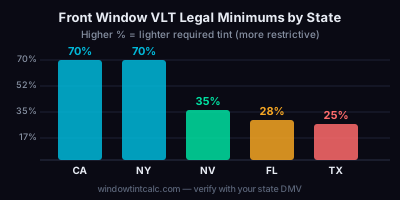
Window Tint Laws by State: The Complete 2026 Guide
State VLT requirements for front side, rear side, and rear windshield vary widely, from 70% in California to 25% in Texas. Know before you tint.
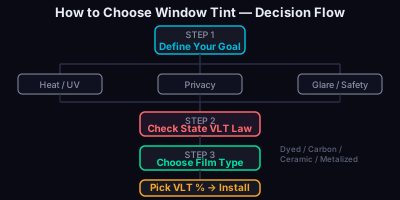
How to Choose the Right Window Tint for Your Car
Choosing window tint means balancing your goal (heat, privacy, UV), your state's legal VLT limit, film type, and a budget between $80 and $800.
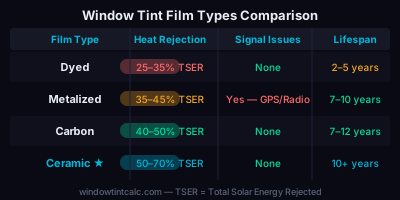
Ceramic vs. Dyed Window Tint: Which Is Worth the Price?
Ceramic film rejects 50-70% of solar heat vs. 25-35% for dyed, lasts 10+ years, and won't interfere with GPS. Is the $200-$400 premium worth it?
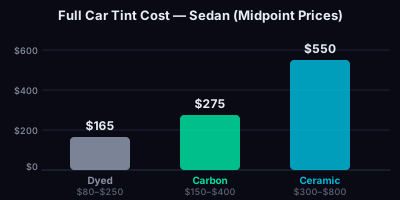
How Much Does Window Tinting Cost? 2026 Price Guide
Full car window tinting costs $80-$250 for dyed film, $150-$400 for carbon, and $300-$800 for ceramic. Vehicle size, installer experience, and film brand all affect the final number.
VLT Explained: What Window Tint Percentages Really Mean
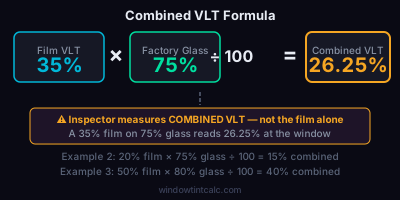
VLT (Visible Light Transmission) is the % of light that passes through your window. A 35% film on 75% factory glass gives you 26.25% combined, not 35%.
DIY vs. Professional Window Tinting: Honest Comparison
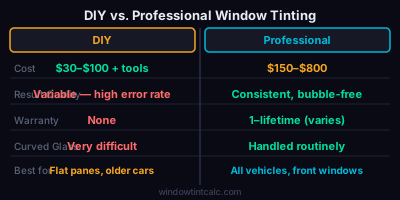
DIY tinting kits cost $30-$100 but have high failure rates on curved glass. Pros charge $150-$800 and back the work with warranties. Here's when each makes sense.
How to Measure Your Window Tint VLT at Home
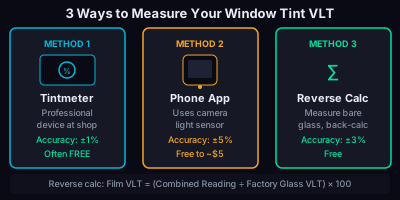
Three methods to measure window tint VLT: professional tintmeter (±1%, often free), smartphone app (±5%), or reverse calculation using factory glass VLT.
7 Real Benefits of Window Tinting Beyond Privacy
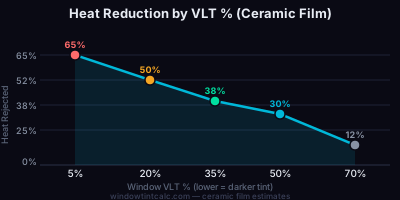
Window tint reduces cabin heat by 30-65%, blocks 99% of UV radiation, holds glass together in accidents, deters theft, and can add $100-$300 to resale value.
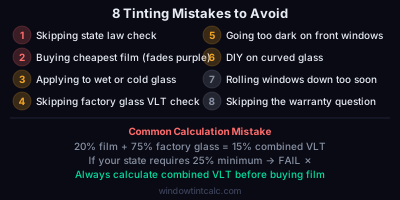
8 Window Tinting Mistakes That Ruin the Result
The costliest tinting mistakes: buying illegal film, skipping the combined VLT calculation, rolling down windows too early, and choosing dyed film that fades purple within 3 years.
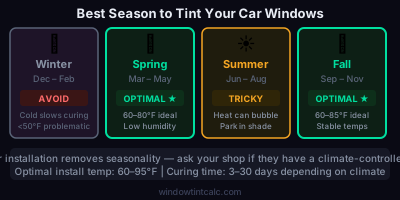
Best Time of Year to Tint Your Car Windows
Spring and fall offer ideal 60-80°F temperatures for window tint installation and curing. Summer's heat and winter's cold both create adhesion and curing problems.