Best Time of Year to Tint Your Car Windows
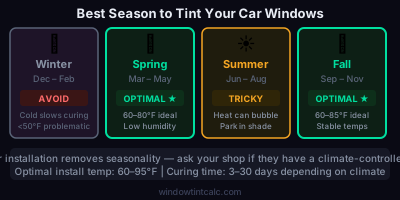
Spring and fall offer ideal 60-80°F temperatures for window tint installation and curing. Summer's heat and winter's cold both create adhesion and curing problems.
Quick Answer: Spring (March-May) and fall (September-November) are the best times to tint, with temperatures between 60-80°F and stable humidity. Summer works but requires shade and care. Winter installs are problematic in cold climates, adhesive needs warmth to cure properly.
Window tinting isn't just about the film you choose, the timing of the install affects how well the film adheres and how cleanly it cures. Get this right and your tint will look perfect within a week. Get it wrong and you'll spend a month staring at hazy windows hoping the bubbles disappear (sometimes they do; sometimes they don't).
Here's what actually matters about timing, why some seasons are better, and what you can control regardless of when you schedule.
Why Temperature and Humidity Matter
Window film adhesive is pressure-sensitive and temperature-dependent. During installation, the film is applied with a slippage solution (soapy water) that lets the installer position the film on the wet glass. After positioning, they squeegee out the water and the adhesive makes contact with the glass.
For this adhesive bond to form properly:
Temperature must be above about 50°F: Below this threshold, the adhesive stays too stiff and won't flow into micro-irregularities on the glass surface. The result: a film that appears to be stuck but hasn't fully bonded. It works loose within months, especially at the edges.
Temperature shouldn't exceed about 95-100°F during install: Extreme heat accelerates the adhesive, it starts curing before you've finished positioning. The installer has less working time, which increases the risk of errors on curved glass or complex window shapes.
Humidity matters for curing time: Higher humidity slows the evaporation of residual water through the film. On a hot, humid August day in Houston, the same film that cures in 3 days in dry Phoenix air might take 3 weeks. Neither is a problem if you know to expect it, the haze will eventually clear. The problem is when people panic at day 5 and try to fix what looks like permanent clouding.
Spring: The Best Window
March through May gives you the ideal combination: temperatures consistently in the 60-80°F range in most of the country, lower humidity than summer, and stable conditions that don't require the installer to work against the clock.
The practical benefits of spring installation:
Faster curing: Moderate warmth and lower humidity means residual water evaporates quickly. Most installs in spring cure within 3-7 days, you'll see clarity return within a week.
Longer installer working time: In 70°F air, the adhesive stays workable for longer during positioning. This matters most for rear windshields with complex curves, the installer has more time to heat-form and position accurately.
Ready for summer: You install in spring and by the time June arrives with 95°F days, the film is fully cured and doing its job, blocking 50-70% of that solar heat before it enters your car.
One scheduling note: spring is also a busy season for tint shops. Get your appointment early, April bookings at quality shops can fill up 2-3 weeks in advance.
Fall: Nearly as Good
September through November mirrors spring, cooling temperatures, typically lower humidity than late summer, and stable conditions. Fall installs cure within a similar timeframe to spring.
The timing advantage: demand is lower. Shops that were slammed in spring and summer often have more availability in fall. You may get a faster appointment and, at some shops, better attention from technicians who aren't rushing through a backed-up queue.
The one consideration: if you're in a northern state and waiting until late November, you're starting to push into the temperature range where cold-weather caution applies. Schedule your fall install in September or October to stay comfortably in the optimal temperature range.
Summer: Workable With Precautions
June through August installs work fine when done correctly, they just require more care.
The heat problem: Parking the freshly tinted car in direct sun immediately after install can cause issues if the adhesive starts curing too fast. This is especially true for dark film in direct sun on a 100°F day.
What reputable shops do in summer:
- Install in a climate-controlled bay (most professional shops have air-conditioned service bays, this largely removes the temperature problem)
- Advise clients to park in shade for the first few days
- Set curing time expectations higher, summer humidity in many areas means expecting 10-14 days before the haze fully clears rather than 5-7
What you should do after a summer install:
- Park in shade or a garage for the first week
- Don't roll windows down for at least 5 days (7 is safer in humid heat)
- Expect the initial haze to take longer than you'd like
- Don't use any window cleaners on the inside of the tinted glass for 30 days
The summer install is fine. The mistake is unrealistic expectations about how quickly it looks perfect.
Winter: The Problem Season
Cold temperature is the enemy of window film adhesive. Below about 50°F outdoor temperature:
Adhesive stiffness: The adhesive won't flow properly onto the glass surface. You can get what looks like a good install, but the film hasn't actually bonded. Edges lift first, then the rest of the film follows over the next few months.
Extended curing: Even if the adhesive does bond in cold conditions (which is possible in a heated indoor bay), the curing process takes dramatically longer. Water vapor doesn't evaporate efficiently in cold air. Expect 2-4 weeks of haze in winter conditions, or longer in genuinely cold climates.
What this means practically: In Minnesota or Wisconsin in January, outdoor installation is a bad idea. The film will fail prematurely.
The exception, indoor heated bays: If a shop works in a climate-controlled service bay that stays at 65-70°F regardless of outside temperature, the winter problem is largely solved. The adhesive cures at the right temperature. The car then needs to stay warm for the first day or two to maintain the curing temperature.
Ask your shop: "Do you install in a climate-controlled bay?" Most professional shops do. This is why winter installation, while not ideal, isn't impossible.
If you're considering a winter install, these questions matter:
- Is the installation bay heated to at least 65°F?
- How long do you recommend waiting before rolling windows down in cold weather?
- What's the expected curing time given current temperatures?
A shop that answers these questions specifically knows what they're doing. Vague answers ("it'll be fine") are a sign they haven't thought about the temperature factor.
What Happens During Curing, Normal vs. Not Normal
The curing period confuses a lot of first-time tint buyers because the windows don't look right immediately after install. Knowing what's normal prevents unnecessary anxiety and prevents you from creating problems by interfering.
Normal during curing (will go away):
- Slight haze or cloudiness on the tinted glass
- Small water bubbles (under 1cm) that move slightly if you press gently
- Slight distortion in the film when viewed at an angle in certain light conditions
These all resolve as the residual water evaporates through the film. The timeline:
- Spring/fall, moderate humidity: 3-7 days
- Summer, humid climate: 7-21 days
- Winter, cold climate: 14-30+ days
Not normal (won't go away):
- Large bubbles (over 2cm) that feel like air pockets rather than water
- Bubbles clustered at the edges or corners
- Creases or ridges in the film surface
- Film that has lifted away from the glass at any edge
If you see these after the normal curing period has passed, contact the shop, you likely have an installation defect that should be covered by the labor warranty.
Post-Install Care Schedule
The first 30 days after installation matter for how the film performs long-term:
Days 1-3: Don't roll windows down at all. Park in shade. Don't touch the interior glass surface.
Days 3-7 (or longer in cold or humid conditions): You can start rolling windows down carefully, just avoid putting pressure on the film edges. Continue parking in shade when possible.
Day 7-30: The haze should be mostly cleared. Avoid cleaning the inside surface of tinted windows with any ammonia-based cleaners. Use a mild soap solution or dedicated tint-safe cleaner. Avoid razor blades, abrasive cloths, and anything with ammonia (Windex and most glass cleaners contain ammonia, they attack the film's adhesive layer).
After 30 days: The install is fully cured. You can clean the windows normally (with ammonia-free cleaner), roll windows up and down freely, and the film should be performing at its rated specification.
Does Timing Matter for Film Quality?
No. The film's performance characteristics, VLT, heat rejection, UV blockage, don't change based on when you install. A ceramic film installed in February in a heated bay performs identically to the same film installed in April. Timing affects the installation and curing process, not the film's long-term performance.
One Last Thing: Run the VLT Calculation Regardless of Season
Whatever time of year you decide to tint, verify your combined VLT before scheduling. Our window tint calculator takes your factory glass VLT and your planned film VLT and gives you the combined number that a tintmeter will actually read.
Getting tinted in perfect spring conditions with the wrong VLT still means a fine and a re-install. Getting the math right before you schedule removes the biggest risk from the equation.
For help with the DIY-versus-professional decision (which timing also affects, since DIY in cold weather is even less forgiving than professional install), our DIY vs. professional tinting guide covers what you're taking on with each approach.
And if you encounter problems after install, bubbles that won't go away, edges lifting, purple-brown discoloration, our common tinting mistakes guide helps diagnose whether it's a curing issue, an installation defect, or a film quality problem.
For more about how we approach accuracy in tint guidance, visit our about page.