Ceramic vs. Dyed Window Tint: Which Is Worth the Price?
Ceramic film rejects 50-70% of solar heat vs. 25-35% for dyed, lasts 10+ years, and won't interfere with GPS. Is the $200-$400 premium worth it?
Quick Answer: Ceramic tint is worth the premium if you're keeping your car more than 3 years and live somewhere hot. It rejects significantly more heat, lasts over a decade, and won't fade purple or kill your GPS signal. Dyed film makes sense for short-term use or very tight budgets.
Walk into any tint shop and you'll be offered options ranging from $80 to $800 for the same car. The difference isn't just brand markup, it's fundamentally different technology. Understanding what separates these film types makes the decision obvious once you know your priorities.
The Four Film Types, Ranked by Technology
There are four main categories of window film sold today. They're not just different price tiers of the same product, they work differently.
Dyed Film
Dyed film is the oldest and simplest technology. Multiple layers of dyed polyester absorb solar energy, heat gets absorbed into the film rather than passing through to your car interior. It looks dark, blocks UV, and reduces glare.
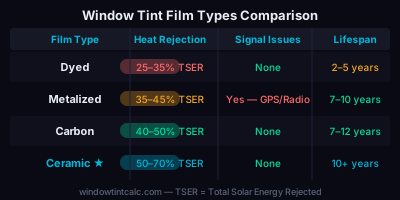
The problems: absorbed heat re-radiates into the car, so cooling effect is limited (25-35% Total Solar Energy Rejection). The dye breaks down with UV exposure. Within 2-5 years, dyed film typically shifts from black to a brownish-purple, a telltale sign of cheap film. It offers no performance advantages beyond basic light blocking.
Cost for a full car: $80-$250 on a sedan.
Metalized Film
Metalized film embeds tiny metallic particles in the film layers. Instead of absorbing solar energy, it reflects it, more effective than dyed at heat rejection (35-45% TSER). It's more durable too, resisting scratches and holding color better than dye.
The dealbreaker for most modern cars: metal particles interfere with radio signals. GPS, satellite radio, cell reception, and remote key fobs all degrade noticeably with metalized film. Some states also limit reflectivity on exterior surfaces. This film type has largely been replaced by carbon and ceramic, which offer better performance without the interference problem.
Cost: $100-$350 full car.
Carbon Film
Carbon film uses carbon particles suspended in the film matrix. No metal means no signal interference. The carbon blocks infrared radiation effectively, heat rejection hits 40-50% TSER. Carbon film also holds its color indefinitely; there's no dye to fade, so the dark appearance stays consistent for 7-12 years with normal use.
For most buyers who want a meaningful upgrade without going all-in on ceramic, carbon hits the sweet spot. It costs noticeably more than dyed but delivers real performance gains.
Cost: $150-$400 full car sedan.
Ceramic Film
Ceramic film uses nano-ceramic particles, microscopic non-metallic, non-conductive particles, that block both UV and infrared radiation at a level no other technology matches. Heat rejection of 50-70% TSER is routinely achievable. It doesn't interfere with any electronic signals. Optical clarity is the best of any film type.
The durability case for ceramic is strong: quality ceramic films come with manufacturer warranties of 10 years to lifetime, and real-world longevity backs that up. The film doesn't fade, doesn't bubble under normal conditions, and maintains consistent performance throughout its life.
Cost: $300-$800 for a full car sedan, depending on brand and installer.
Heat Rejection: Where the Real Difference Shows Up
Heat rejection is where the gap between film types matters most. On a 95°F summer day with the car parked in direct sun, your dashboard can hit 180-200°F without tint. Here's how the technology compares in practice:
- Dyed: Reduces solar heat gain by roughly 25-35%. You'll notice a mild improvement.
- Carbon: 40-50% reduction. A meaningful difference, parked car cools faster, AC works less hard.
- Ceramic: 50-70% reduction. The difference between ceramic and no tint is dramatic. On a hot day, the temperature differential is palpable within seconds of getting in.
To be clear: VLT percentage (darkness) isn't what drives heat rejection, film technology is. A 70% VLT ceramic film blocks more heat than a 20% VLT dyed film. If heat is your primary goal, film type matters far more than how dark you go.
You can verify the heat protection on any VLT level using our window tint calculator, plug in your target combined VLT to make sure you're staying legal while still getting the protection you want.
Signal Interference: A Modern Car Problem
In 2010, signal interference from metalized film was an annoyance. In 2026, modern cars have embedded GPS, connected infotainment, wireless key fobs, blind spot sensors that use radar, and phone-as-key features. Metalized film is increasingly incompatible with all of it.
Carbon and ceramic film have zero metallic content and cause no measurable signal degradation. This alone is why metalized film has lost most of its market share.
If anyone tries to upsell you metalized film as a "premium" option, that's outdated advice. The market moved to carbon and ceramic specifically because they work better without the interference problem.
Fade Timeline: What Cheap Film Looks Like at Year 3
This is the aesthetic case that doesn't get talked about enough. Dyed film fading to purple isn't just ugly, it's a signal to everyone that you bought the cheapest option, and it affects light transmission as the dye breaks down.
Here's the typical fade progression for dyed film:
- Year 1-2: Looks fine, still dark
- Year 2-4: Beginning to shift brown/purple in high-UV zones (top of windows, near the edge of defrosters)
- Year 3-5: Visibly purple from outside, especially in direct sun
Carbon film: holds color indefinitely. The carbon matrix doesn't react to UV.
Ceramic film: same, no organic dye to degrade. 10-year-old ceramic film from a quality manufacturer looks essentially the same as day one.
Does Ceramic Actually Save Money Long-Term?
Let's run the numbers honestly. Say you have a sedan and you're choosing between dyed ($165) and ceramic ($550).
Dyed scenario: Film lasts 4 years before looking bad. You pay $165 + $50 removal + $165 replacement = $380 over 8 years.
Ceramic scenario: Film lasts 12+ years, comes with a lifetime warranty. You pay $550 once for 12+ years.
Over 12 years: dyed costs you roughly $570+ (two replacement cycles). Ceramic costs $550 once. The economics flip after about 6-8 years.
If you're keeping your car 5+ years, ceramic pays for itself. If you're planning to sell in 2 years, dyed is the economically sensible choice.
When Each Film Type Makes Sense
Buy dyed film when:
- You're tinting a car you plan to sell within 2 years
- You're tinting a second car you don't care deeply about
- Budget is truly the binding constraint and heat rejection isn't a priority
Buy carbon film when:
- You want real heat rejection without paying full ceramic prices
- You're keeping the car 4-8 years
- You want no signal interference without going premium
Buy ceramic film when:
- You're keeping the car long-term (5+ years)
- Heat rejection is a priority (hot climate, or you park outside)
- You have a luxury vehicle where warranty and clarity matter
- You want to be done with the decision for a decade
For a full breakdown of what each film type costs across different vehicle sizes and what to watch for in installer quotes, read our window tint cost breakdown guide.
The VLT Calculation Still Applies to All Film Types
Regardless of which film you choose, the combined VLT formula is the same. Your inspector doesn't care whether you installed ceramic or dyed, they're measuring how much light passes through.
Combined VLT = (Film VLT × Factory Glass VLT) ÷ 100
Say you want ceramic and you're in a state with a 35% front window minimum. Your factory glass is 75% VLT. You need:
Film VLT = (35 ÷ 75) × 100 = 46.7%
You'd need to ask for a ~47% or lighter ceramic film on the front windows. Most ceramic brands make films at 50%, 40%, 35%, and 20%, so a 50% ceramic keeps you legal with some margin while still delivering meaningful heat rejection.
Run your specific numbers through the tint VLT calculator before going to the shop. It handles the math and tells you exactly what VLT to ask for.
What to Ask Your Installer
When you're ready to move forward, these questions will separate knowledgeable shops from ones that will upsell you on vague "ceramic" claims:
1. What brand and product line is this film? (Don't accept "ceramic brand", get the actual name)
2. What's the TSER rating for this film at the VLT I'm choosing?
3. Does the warranty cover fading, bubbling, and delamination? Who honors it, you or the manufacturer?
4. Can I see the film spec sheet?
Reputable ceramic brands (including Llumar, 3M, XPEL, SolarGard, and Huper Optik) publish TSER data publicly. If an installer can't tell you the product name or TSER rating, they're either not using a name-brand film or they don't know their product, both are red flags.
For a more complete guide to the buying decision, including how to think about heat vs. privacy vs. legal limits, read our how to choose window tint guide. And for the full case on why window film is worth the investment regardless of type, check out our window tint benefits breakdown.