Window Tint Laws by State: The Complete 2026 Guide
State VLT requirements for front side, rear side, and rear windshield vary widely, from 70% in California to 25% in Texas. Know before you tint.
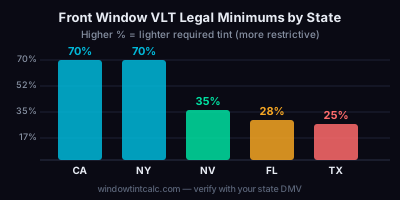
Quick Answer: Window tint laws vary by state and window position. Front side windows are the most restricted, typically 70% VLT in California and New York, 35% in Nevada, 28% in Florida, and 25% in Texas. Always check your state's rules before buying film.
You just bought a car, you want darker windows, and now you're staring at a wall of legal jargon online trying to figure out if 20% tint will get you pulled over. Good news: the rules aren't that complicated once you know what to look for.
Every state sets its own VLT (Visible Light Transmission) minimums for different window positions. VLT is simply the percentage of light that passes through your glass, lower numbers mean darker tint. A 20% VLT window lets 20% of light through and blocks 80%.
How the Federal Law Fits In
Federal law sets baseline rules for manufacturers but doesn't directly regulate aftermarket tint on private vehicles. The Federal Motor Vehicle Safety Standard (FMVSS) 205 governs glazing materials, requiring factory glass to meet minimum light transmission standards. Once you drive off the lot, state law takes over.
The practical result: your factory glass already has some VLT built in, typically 70-80% on side windows, sometimes as low as 65% on rear glass. That matters a lot when you add film, because the two numbers multiply together. More on that in a moment.
State-by-State VLT Requirements
Here's how five major states break down their front side, rear side, and rear windshield rules:
California
- Front side windows: 70% VLT minimum
- Rear side windows: Any darkness allowed
- Rear windshield: Any darkness allowed (with dual side mirrors required)
- California is strict on front windows. A lot of people are surprised that 70% means the film itself has to be nearly clear, factory glass already sits around 70-75%, so your combined VLT with even a light film will drop below that threshold. Use our VLT calculator to check whether your chosen film will pass.
Texas
- Front side windows: 25% VLT minimum
- Rear side windows: 25% VLT minimum
- Rear windshield: 25% VLT minimum
- Texas gives you a lot more latitude. A 35% or even a 20% film on the rear can easily work, depending on your factory glass. Front windows at 25% are manageable with a light-to-medium ceramic film.
Florida
- Front side windows: 28% VLT minimum
- Rear side windows: 15% VLT minimum
- Rear windshield: 15% VLT minimum
- Florida splits by position. The front is stricter than Texas but significantly more permissive than California. Rear windows can go quite dark, 15% is a noticeable privacy tint.
New York
- Front side windows: 70% VLT minimum
- Rear side windows: 70% VLT minimum
- Rear windshield: 70% VLT minimum
- New York is one of the strictest states. Front and rear side windows both require 70%, meaning there's almost no room for any film that darkens the glass. Your only real option is a clear UV-blocking film or a very light "barely-there" tint.
Nevada
- Front side windows: 35% VLT minimum
- Rear side windows: Any darkness allowed
- Rear windshield: Any darkness allowed
- Nevada sits in the middle, a 35% front window is dark enough to provide real heat rejection and privacy while still being legal. Rear windows are unrestricted, which opens up a lot of options.
The Windshield Strip Rule
Most states allow a non-reflective tint strip on the top 4-6 inches of the windshield, often called an "eyebrow" strip. California allows it above the AS-1 line (usually about 5-6 inches from the top). Texas allows a 5-inch strip. Florida allows it above the AS-1 line. Check your state's specific measurement, getting this wrong is an easy ticket.
How Inspectors Actually Measure VLT
Law enforcement and inspection stations use a device called a tintmeter (or tint meter). It clamps onto the glass and shines a calibrated light through, measuring what percentage comes through on the other side.
Here's the part that trips people up: the tintmeter measures the combined VLT of the glass and film together, not just the film alone. So if you buy a 35% film and your factory glass is 75% VLT, your combined reading will be:
Combined VLT = (35 × 75) ÷ 100 = 26.25%
That 35% film just measured as ~26% at the window. If you're in Nevada with a 35% minimum, you've just failed inspection, even though you bought "35% film." This is one of the most common and expensive mistakes tint buyers make.
Use our window tint VLT calculator to run the math before you commit to a film. It accounts for your factory glass VLT and gives you the actual number an inspector will see.
For a deeper explanation of how the formula works, read our guide on VLT and what tint percentages really mean.
Consequences of Illegal Tint
Getting caught with illegal tint isn't just an inconvenience. Here's what can happen depending on your state:
- Fix-it tickets: Most states issue a correctable violation. You pay a fine ($25-$200 in most states) and have a set number of days to remove the tint and get re-inspected.
- Equipment violations: In some states, illegal tint counts as an equipment violation that goes on your record and can affect insurance rates.
- Failed inspection: In states with annual safety inspections (New York, Virginia), illegal tint will cause a failed inspection and prevent registration renewal.
- Officer discretion: Some officers write equipment warnings rather than citations on a first stop. Others write the ticket immediately. Don't count on discretion.
The real cost of illegal tint isn't just the fine, it's paying to remove the film you just bought. A full car tint job can cost $150-$800, and professional removal adds another $50-$150. Running the numbers first costs nothing.
Laws Change, Verify Before You Tint
This guide reflects 2026 rules, but state legislatures update window tint laws periodically. Several states adjusted their rules between 2022 and 2025 as ceramic tint became more mainstream. Before you schedule your install, verify current rules through your state's DMV website or the state legislature's vehicle code.
Your installer should also know your state's rules, any reputable shop will refuse to install illegal film or at minimum warn you. If a shop is willing to install 5% all around on your California car without saying a word, that's a red flag about their overall quality and professionalism.
If you've already got tint and you're not sure where it falls, read our guide on how to measure your window tint VLT at home. You can also stop by most tint shops for a free meter reading, they typically take 2-3 minutes and cost nothing.
For more on how we approach tint calculations and sourcing, visit our about page.
Quick Reference: Common States
| State | Front Side | Rear Side | Rear Windshield |
|---|---|---|---|
| California | 70% | Any | Any |
| Texas | 25% | 25% | 25% |
| Florida | 28% | 15% | 15% |
| New York | 70% | 70% | 70% |
| Nevada | 35% | Any | Any |
| Illinois | 35% | 35% | 35% |
| Arizona | 33% | Any | Any |
| Georgia | 32% | 32% | 32% |
| Ohio | 50% | Any | Any |
| Washington | 24% | 24% | 24% |
Always verify with your state DMV, these numbers are for reference and reflect 2026 rules.
Bottom Line
Front side windows are where most states draw the line. If you live in California or New York, your options are genuinely limited, light UV-blocking films or near-clear ceramic are your best choices. In Texas, Florida, or Nevada, you have real flexibility.
Before you do anything, know your combined VLT number. The film percentage on the box isn't what a tintmeter will read. Run the calculation, check your state's limit, and then talk to your installer with the actual numbers in hand.